Jan 4
Kellyanne Conway Suggests Rosie O'Donnell "Needs a Husband"; Calls Her A "Slob"
READ TIME: 3 MIN.
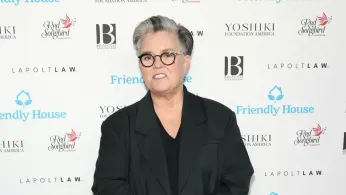
Kellyanne Conway, former senior counselor to President Donald Trump and current co-host on Fox News' "The Five", made headlines on December 30, 2025, by suggesting that critics of the president, including openly lesbian comedian Rosie O'Donnell, need "a hug or a husband or a dog" to overcome their opposition. During the segment, Conway directly addressed a TikTok video posted by O'Donnell, in which the comedian called for Trump's removal from office via the 25th Amendment, labeling him a "blob" and warning of potential election interference. "Don’t you have anybody who loves you? You need a hug or a husband or a hobby or a dog. Get yourself some help," Conway stated, also describing O'Donnell as suffering from "Trump Derangement Syndrome," a phrase conservatives use to dismiss anti-Trump sentiment.
O'Donnell, who came out as a lesbian in 2002 during a benefit for Ovarian Cancer Research, has been married to two women and is a prominent figure in LGBTQ+ visibility. She announced her identity publicly with the words, "I’m a dyke! … I don’t know why people make such a big deal about the gay thing." Conway's suggestion of a "husband" overlooked this well-documented aspect of O'Donnell's life, prompting observations that the comment was tone-deaf to queer relationships.
The exchange reignites a feud between Conway and O'Donnell that dates back years, fueled by O'Donnell's vocal opposition to Trump during both of his terms. In her recent TikTok, O'Donnell urged action "before the November elections," expressing fears that Trump might provoke a war to cancel voting. She has cited political turmoil as a key reason for relocating from the United States to Ireland in January 2025, just before Trump's inauguration, moving there with her child Clay. Conway referenced this move on air, noting, "By the way, she moved to Ireland, but she never moved on. And that’s the problem."
Conway also called O'Donnell "a slob calling someone else a blob," tying her critiques to personal attacks amid broader commentary on Democratic strategies for 2028. This is not the first clash; O'Donnell has consistently criticized Trump, placing her at odds with Conway, who served as his campaign manager and advisor.
LGBTQ+ commentators noted the irony of Conway's advice, given that her daughter Claudia identifies as a lesbian and has publicly praised her mother for supporting her sexuality. Advocacy groups emphasized that such remarks perpetuate stereotypes about queer people needing heterosexual relationships for fulfillment, undermining the validity of same-sex partnerships. O'Donnell, through her career on shows like The Rosie O'Donnell Show and her activism, has long championed transgender people, non-binary individuals, and broader LGBTQ+ rights, making her a symbol of resilience against political adversity.
The incident highlights ongoing tensions between conservative media figures and LGBTQ+ voices critical of Trump-era policies, including those affecting marriage equality and anti-discrimination protections. While Conway framed her words as lighthearted advice for "toxic, chaotic" critics, they resonated as exclusionary in queer communities, where affirming language centers diverse identities like lesbian, gay, bisexual, transgender, queer, and others.
Conway's appearance on "The Five" underscores her continued influence in conservative circles post-Trump administration. The show's format often features panel discussions on current events, where guests like Conway address celebrity critics. O'Donnell's TikTok platform has become a space for her unfiltered political takes, amplifying her reach to younger, progressive audiences, including many in the LGBTQ+ community.
As of January 2, 2026, neither Conway nor O'Donnell has issued further public statements on the matter, but social media discussions continue among LGBTQ+ users affirming O'Donnell's right to critique power without personal jabs at her identity. This episode reflects persistent divides in American discourse, where personal identities intersect with political rhetoric.