3 hours ago
Roger Conners' "Meat" Emerges as a Bold Queer Slasher Redefining Horror Cinema
READ TIME: 5 MIN.
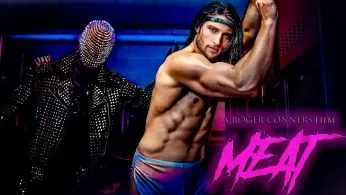
Director Roger Conners, a native of Westlake, Ohio, has created what many critics are calling a watershed moment for LGBTQ+ representation in horror cinema. "Meat," which is currently playing the festival circuit, represents a deliberate and unapologetic reclamation of the slasher genre for queer audiences . The film has already begun collecting accolades, winning Best Director and Best Actor awards at the Houston Horror Film Fest . With a cast that includes recognizable talent from the drag and entertainment world, including Pandora Boxx from "RuPaul's Drag Race," the film signals a maturation of queer cinema within the horror space .
Conners characterizes "Meat" as a "LGBTQ slasher movie" that proudly embraces its queer identity rather than merely including queer characters as an afterthought . This distinction is crucial. Where previous queer horror films may have featured LGBTQ+ characters within a traditionally structured narrative, "Meat" centers the queer experience itself—its aesthetics, its vulnerabilities, and critically, its contradictions—as the primary lens through which the horror unfolds.
The film's plot begins with a tragedy that sets the stage for years of festering resentment and, ultimately, violent retribution. After a night of drugs and debauchery results in the fatal overdose of an underage gay man, an innocent bystander is left to take the blame . Years later, a masked killer known as "The Stud, " inspired by fetish fashion and queer culture, begins systematically eliminating the group of friends responsible for abandoning the victim .
What distinguishes "Meat" from traditional slashers is its refusal to position the main cast as sympathetic protagonists. The characters are deliberately written as intensely unlikeable, raising uncomfortable questions about accountability, consent, and community responsibility within gay spaces . This creative choice reflects Conners' broader artistic vision: to explore the darker aspects of gay culture without shying away from critique, even as the film celebrates queer identity and resilience. The film's prelude, which follows a character named Noah, is described as "lengthy and powerfully constructed, e stablishing the emotional and moral stakes that drive the narrative forward .
Conners' directorial approach demonstrates a sophisticated understanding of horror cinema's visual language while pushing the genre in new directions. The film was shot primarily using local talent in downtown Cleveland and at a mansion in Hocking Hills, establishing a distinctly regional American setting for the narrative . The cinematography and editing, handled by Mick Kunz, creates what reviewers describe as "popping cinematography" that balances the film's brutal violence with moments of visual beauty and intentional camp .
The practical effects work, executed by Ron George and Deryk Wehrley, has garnered particular praise for its ingenuity and impact. One reviewer noted that "considering the indie nature of this film, Conners and his crew worked absolute wonders with their use of practical effects to create memorable kills," with the film featuring seventeen on-screen murders . The violence is neither gratuitous nor sanitized; instead, it serves the narrative's exploration of revenge, justice, and the consequences of collective cruelty.
The ensemble cast brings depth and nuance to their roles, elevating "Meat" beyond the typical slasher formula. Cody Steele, cast as the film's final survivor, demonstrates remarkable range in portraying a character who endures successive traumas while maintaining a thread of innocence and vulnerability . The supporting cast, which includes Anthony Covatta, Matt Kane, Jason Eno, Margaret Harper Jenkins, Hussein Hassan, Katelynn E. Newberry, Angelia Green, Haley Lynn Rose, and George Tutie, collectively creates a rich tapestry of queer male identity and experience .
Matt Kane, in particular, has been highlighted by critics for his standout performance and physical presence, embodying the archetype of masculine desirability within gay culture while also serving as a commentary on that very desirability . The killer, portrayed by Cory Blackledge, delivers what reviewers describe as an "epic" final performance that anchors the film's exploration of vengeance and retribution .
"Meat" operates on multiple thematic levels simultaneously. On the surface, it functions as a traditional revenge slasher, complete with a masked killer and escalating body count. Beneath that surface, however, Conners and co-writer R. Zachary Shildwachter have crafted a film that interrogates complex issues within LGBTQ+ communities: the commodification of bodies, the role of substance use in queer social spaces, questions of consent and accountability, and the ways in which communities can fail their most vulnerable members .
The film's aesthetic deliberately embraces what might be called "queer maximalism." Reviewers note the film's abundance of nudity, with six scenes featuring full frontal male nudity and eleven scenes featuring male nudity overall, integrated seamlessly into the narrative rather than presented as titillation . This visual abundance reflects the film's broader commitment to centering queer male bodies and sexuality as worthy of representation and, indeed, of horror cinema's attention.
One reviewer described the film as "an acid trip gagged with blood, nudity and more rhine stones than a Dolly Parton concert," capturing both the visual excess and the intentional camp sensibility that pervades the work . The dialogue incorporates queer vernacular and humor, with one critic noting funeral-related quips like "Are you on Grindr? We're at a funeral?" that blend mourning with the irreverent humor characteristic of queer culture .
"Meat" does not exist in isolation within the landscape of queer horror. Reviewers have drawn comparisons to Paul Etheredge-Ouzts' 2004 film "Hellbent," which is credited with establishing the visual and thematic vocabulary for explicitly queer slasher cinema . Where "Hellbent" offered glimpses of what queer horror could become, "Meat" is understood as a significant evolution—a film that takes the themes established by its predecessor and "turns up the volume in every way" .
The film's release timing carries particular significance. Conners has been deliberate in releasing "Meat" at a moment when the LGBTQ+ community faces considerable challenges and increased visibility in political discourse . In this context, the film functions not merely as entertainment but as a form of cultural assertion—a statement that queer stories, queer bodies, and queer perspectives deserve space within mainstream cinema, even within genres traditionally associated with mainstream commercial appeal.
The critical response to "Meat" has been overwhelmingly positive, with reviewers emphasizing the film's technical proficiency, emotional depth, and cultural significance. One critic declared it "the gay slasher of the year," while another suggested it represents "how you transition from indie filmmaking to mainstream filmmaking" . The film currently holds a 7. 2 out of 10 rating on IMDb, based on 200 user ratings, though this metric may not fully capture the film's reception within LGBTQ+ film communities .
Conners' directorial debut came in 2020 with the film "Rebirth, "but "Meat" represents his most ambitious and fully realized work to date. Multiple reviewers have suggested that the film's success positions Conners as a significant emerging voice in horror cinema, with one critic noting that this is "his make-or-break moment" and expressing confidence that "he's about to receive his flowers after years in the business" .
There is already speculation about the film's potential for sequels. One reviewer stated, "While the film wraps up The Stud's storyline neatly by the time credits roll, we would be shocked if audiences are not clamoring for a sequel to follow their exploits to gayborhoods across the nation" .
"Meat" represents a significant moment in both queer cinema and horror cinema more broadly. By refusing to sanitize or soften the queer experience, by presenting LGBTQ+ characters with complexity and moral ambiguity, and by centering queer aesthetics and sexuality as worthy of serious artistic attention, Conners has created a film that challenges audiences while celebrating queer resilience and creativity. The film's critical success suggests that audiences—both within and outside LGBTQ+ communities—are hungry for horror cinema that takes queer stories seriously and refuses to apologize for its subject matter or its visual excess. As "Meat"continues to circulate through film festivals and streaming platforms, it will likely establish itself as a landmark work in the evolution of queer horror cinema.